
Written by Simone Vos
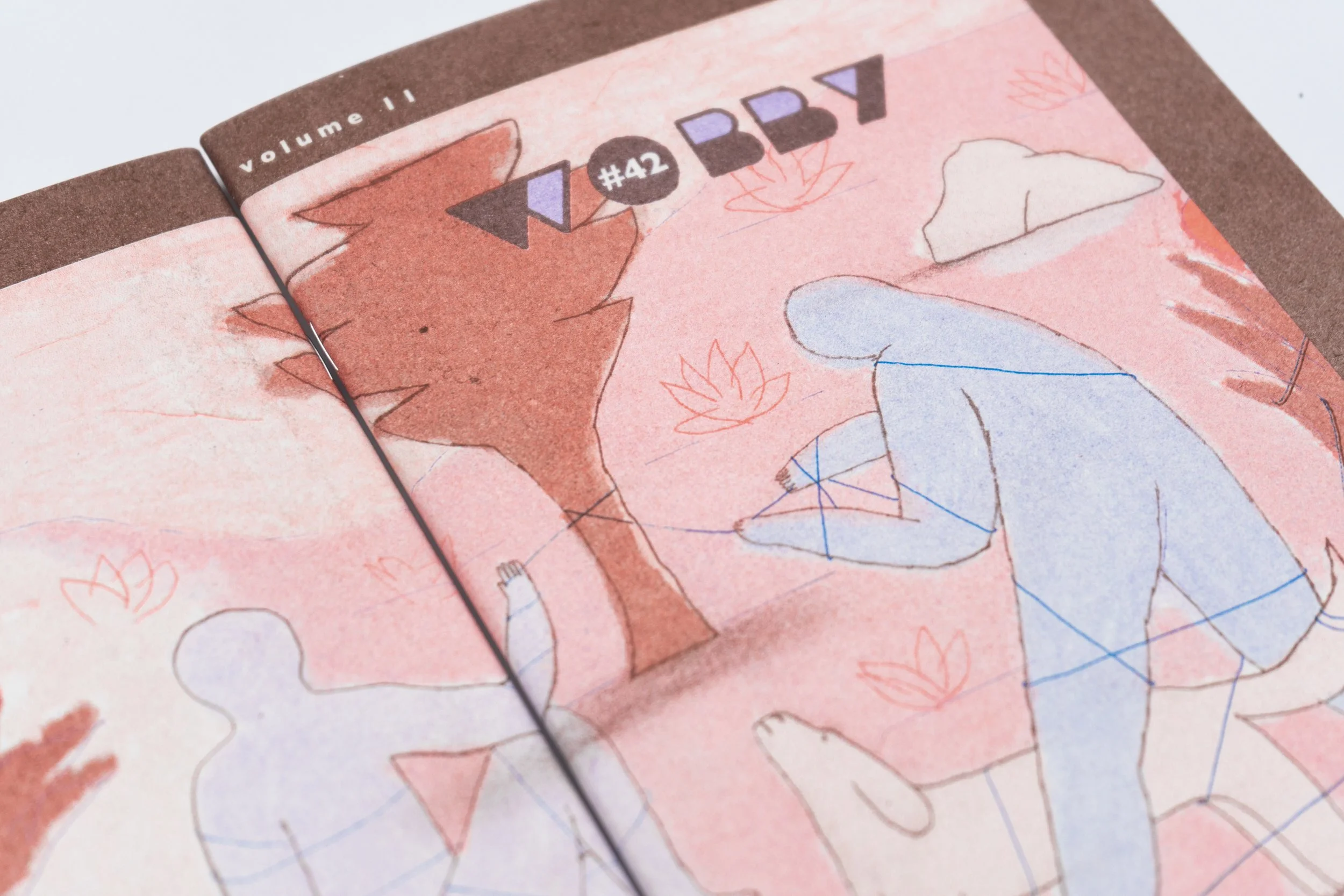
Wobby #42 ends this year with the theme ‘Lore Galore’, about folklore. This edition is co-curated with Mari Campistron. “Folklore is more than tales passed down through generations; it’s a repository of history, customs, and beliefs”, she explains. “In this issue, we asked the selected artists to reflect on the way these tales and traditions are still relevant and how they adapt to our current society. What do artists want to say about traditions and myths?”
French artist Marion Jdanoff (44) created the cover for Wobby #42. Marion tells us how it came about: “When Mari and Marjolein asked me for this commission, I went a bit meta with the theme. I tried to intertwine everyday life and traditions into my illustration. Sometimes traditions and myths around them can be a bit overwhelming. I find it interesting to think about how stories link us together, that’s what I tried to show in this cover.”
Territories tell stories
“Myths and folklore can ground and connect us but can also be a bit in the way. I linked the myths around nature and territory to this illustration. For example, the rocks in the forest are connected to the history of that place. There are tales about these places, and that’s interesting”, says Marion.
For most of her work, Marion takes inspiration from everyday life: “Anecdotes from people around me, other artists that I like; they inspire me. I try to put something mythological in all my work. You can find the magic of everyday life in my stories.”
Interest in memory and traces of experience
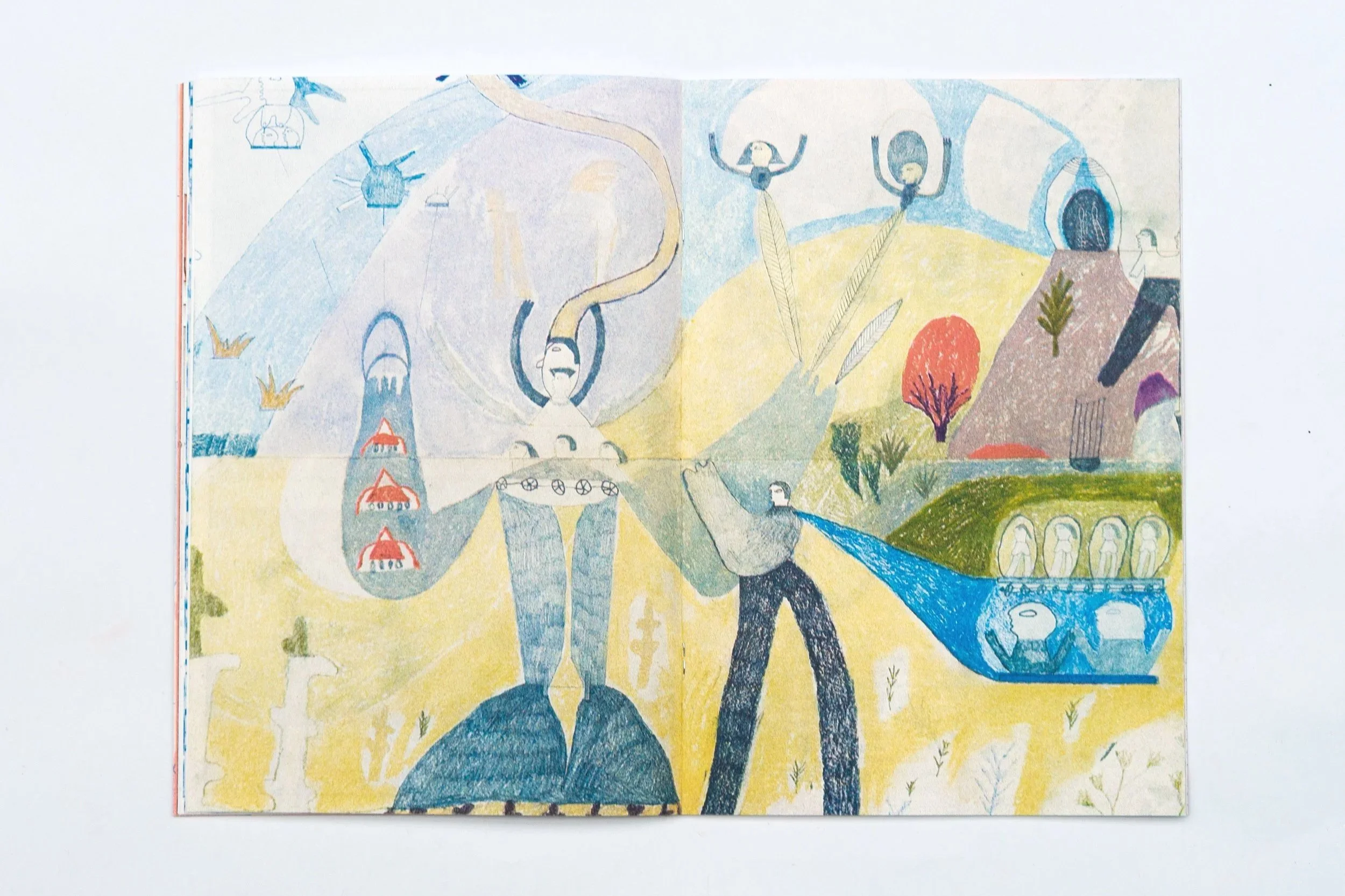
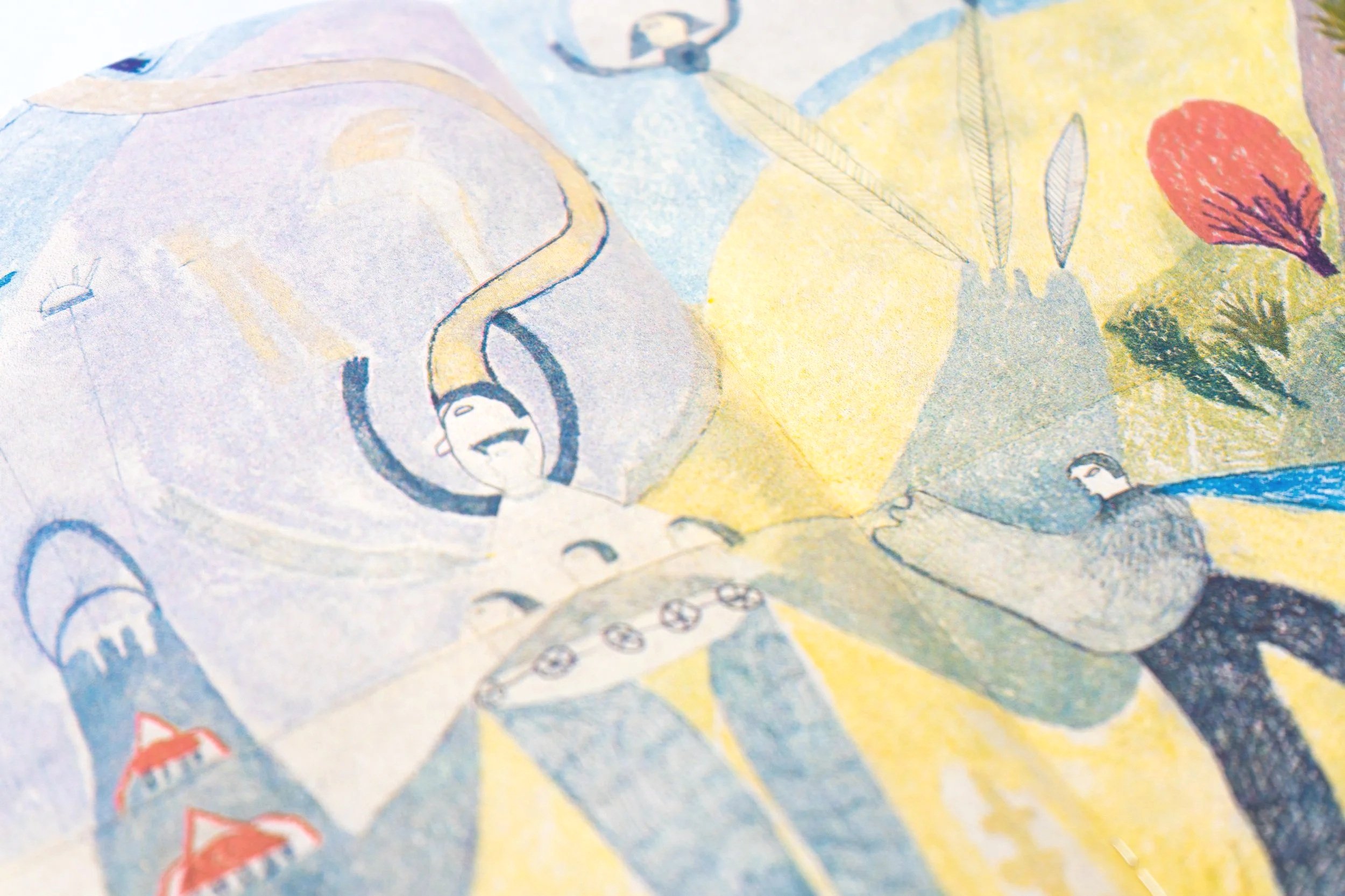
Abel Burger (43), also from France, is inspired by an ongoing interest in memory, ancient imagery, and the way the body carries traces of experience. “I often use oblique forms and fragmented shapes because they create a sense of quiet tension and inward movement. The piece came naturally, as part of my attempt to translate a feeling more than a narrative”, Abel says.
“My work often combines ancient paper, organic materials, and drawn or painted fragments. I’m drawn to images that sit between the sacred and the intimate, as if they belong to a dream or a memory that isn’t fully mine. Ideas usually begin with a sensation, a colour, a shape, a texture. Then I follow it patiently until it reveals a form. I try to let the work lead rather than impose a fixed concept from the start.”
Mexican folklore
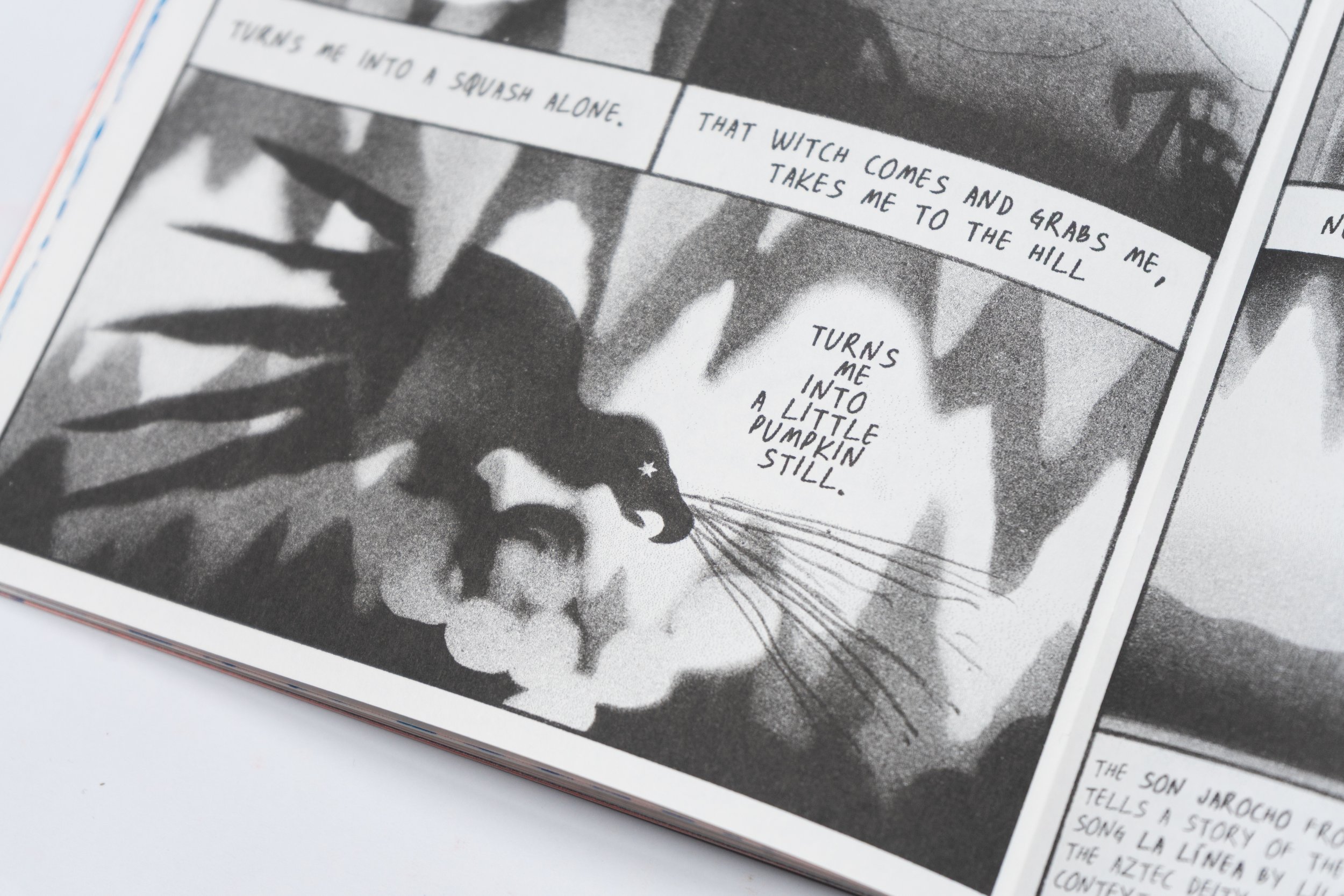
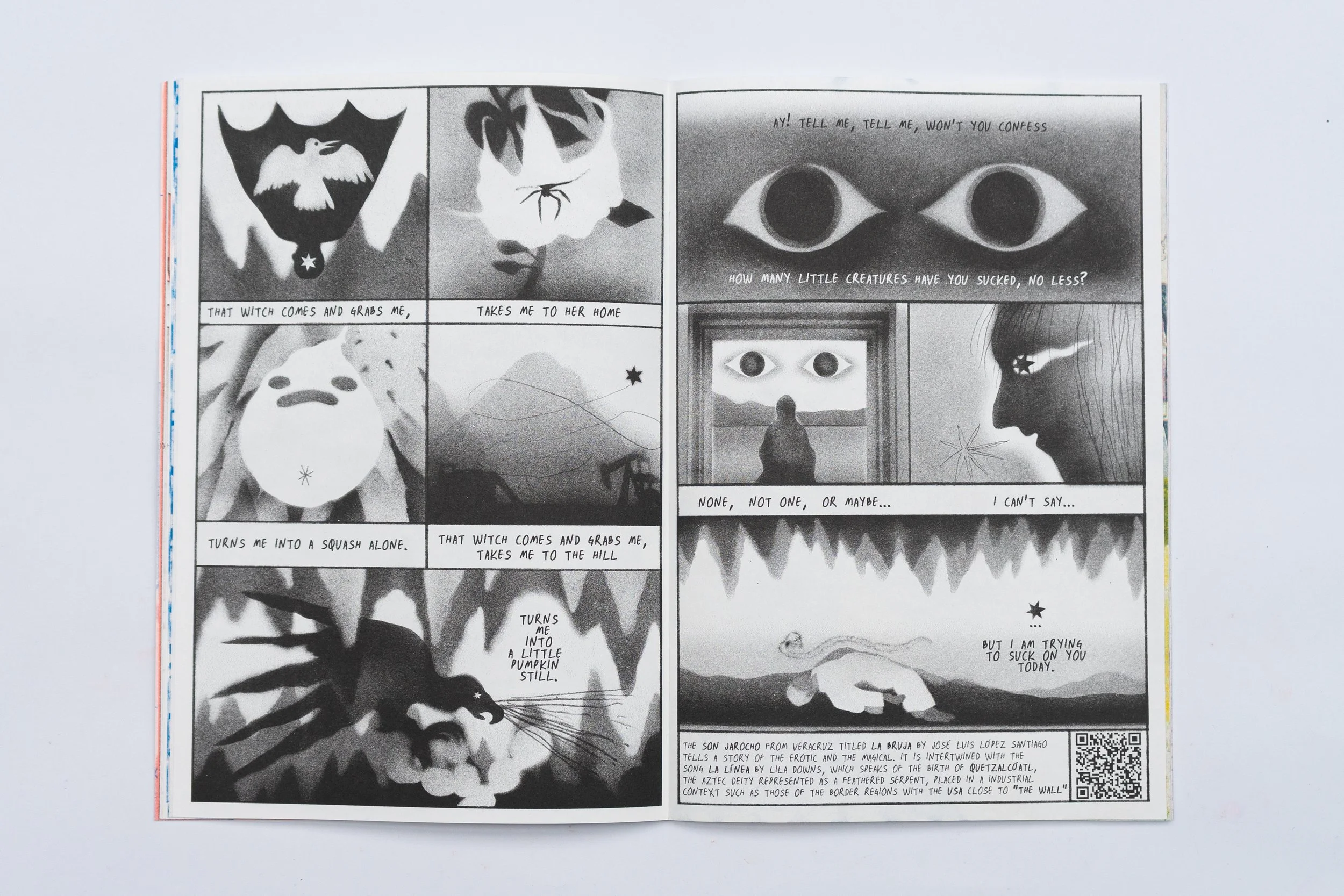
The work of Luis Safah (39) from Mexico is based on two different songs from Mexican culture and folklore. The first is Tlen Huicani - La Bruja, and the second is La línea - Lila Downs. “In Mexico, a lot of people talk about folklore, but most of the time it’s a bit clichéd for me. Of course, we celebrate the Day of the Dead, and we have a lot of candles and flowers in our culture, but there’s more”, he states.
“In a lot of stories in Mexico, people sing. That clicked in my head: I wanted to translate two songs that are really about Mexico into my comic for Wobby. La Bruja is a weird story about a guy who talks with a witch and gets seduced by her. At some point, it is like an erotic game between him and the witch”, Luis tells.
“It’s a kind of repetitive song, and that’s very specific for Mexico. I mixed it with another song: Lila Downs, about the influence of the Mexican border and all that’s going on there in our daily life. You can feel the rhythm of these songs in the comic.”
Luis uses a lot of different styles in his illustrations. For this comic, he used an airbrush. “I prefer to use as many techniques as possible for different works. I’m still learning, and I like that. It depends on my mood and the project, which techniques I use. This story was perfect for airbrushing, with a lot of shadows and handcraft.”
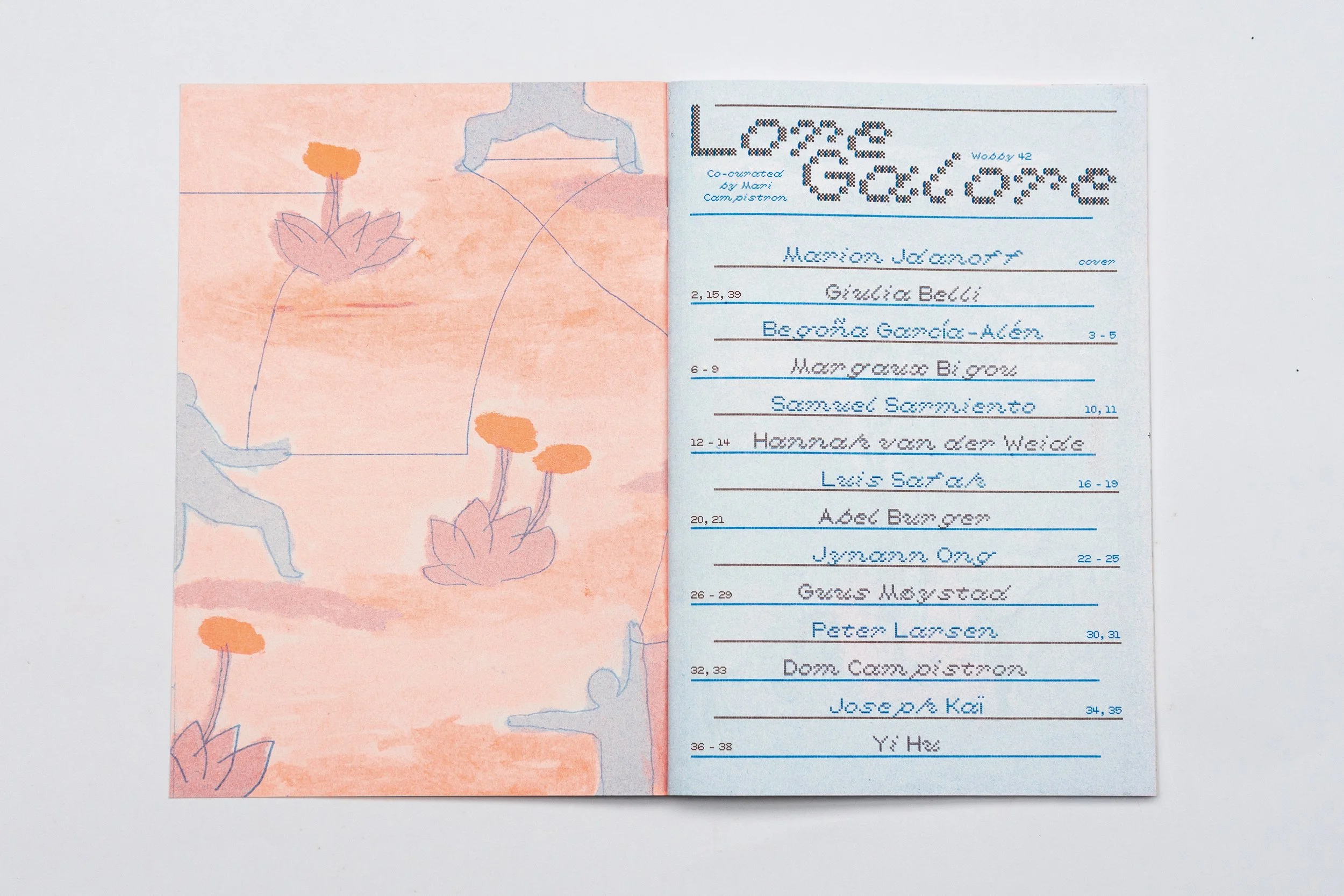
Marion also likes to work with a lot of techniques and styles in her work, she explains. “I tend to change my techniques just to renew the pleasure. Now I’m in my oil paint period, which keeps my work exciting. I have been making drawings for almost twenty years, and I also work together in a duo: Palefroi. We make prints and books and have exhibitions. We draw together and apart, which makes it interesting.”
Favourite myth?
For Marion, there’s not one particular story; she likes a lot of stories. But Abel picks out a particular narrative: “One myth that stays with me is the story of Alexander the Great travelling to the Temple of Amun in the desert. His journey is often read as part of his desire to conquer the outer world. For me, the meaningful part of the myth is the idea of conquest turned inward. I relate to it as a search for an inner territory, shaped by intuition and transformation rather than power.”
Luis: “The relationship with the volcano Popocatépetl, which is close to my home, is an interesting one. There are a lot of myths around this volcano. For example, when a baby is born, people show it to the volcano. And in May, a lot of people celebrate the rain. That’s important, to know about your own history and the stories that are part of our culture.”